
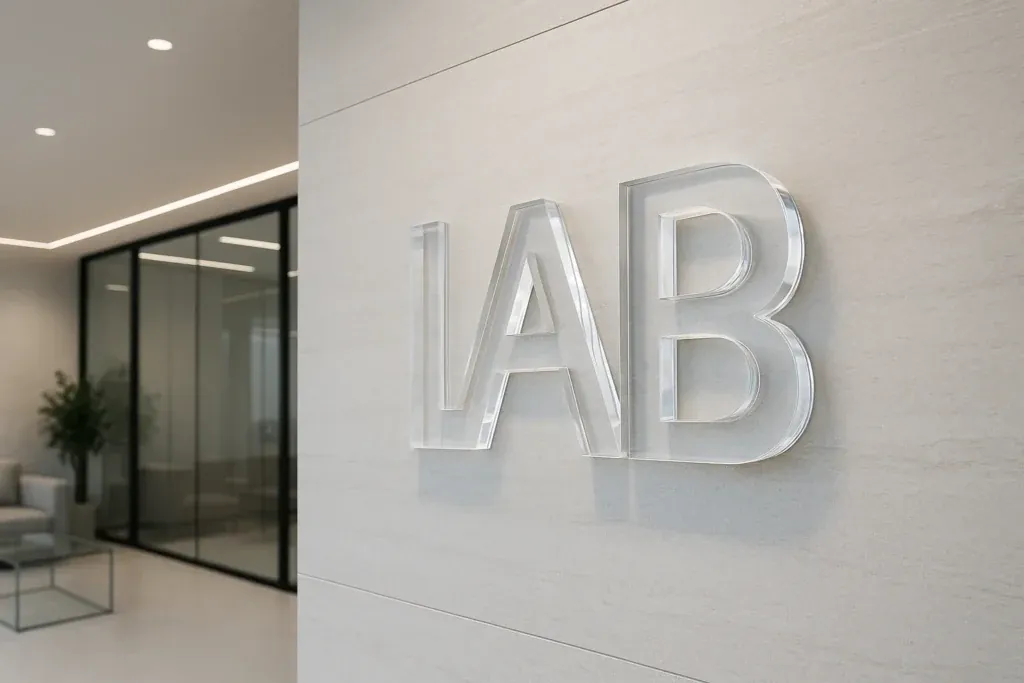
Acrylic is useful in branding when a project needs clean edges, colour, depth or controlled illumination without the weight of glass. It works well for reception logos, wall signs, display parts and smaller wayfinding pieces. It is not the right answer for every site, so the material should be chosen after the viewing distance, fixing surface, weather exposure and daily handling are understood.
Where acrylic works well in a branding project
Reception logos and wall signs
Cut acrylic letters can be fixed directly to a wall, mounted on spacers or built in layers with a backing panel. The right option depends on the logo, wall finish and viewing distance. Small strokes and tight spacing should be checked at the final size before production.
Retail displays and product branding
Acrylic risers, logo blocks, tester trays and header panels keep the product visible while carrying campaign artwork. A display should also allow easy refilling, cleaning and cable access. See the acrylic display stands service for commercial display requirements.
Illuminated signs and light boxes
Clear, opal and coloured acrylic behave differently around LEDs. The design needs enough depth for even light, access to the electrical components and a fixing method suited to the wall or fascia. For a quotation, provide the artwork, overall size, preferred lighting effect and a photograph of the installation area.
Name plates and wayfinding
Door signs, desk plates and room identifiers need consistent type sizes, colours and mounting details. A complete sign schedule is usually easier to produce accurately than a series of separate one-off requests.
Events and temporary campaigns
Brand panels, product plinths and table signs can be made for short campaigns, but transport and storage still matter. Removable graphics or replaceable header panels may be more practical when the structure will be reused.
What to decide before requesting a quote
- Location: indoor, outdoor, reception, shopfront, counter or exhibition stand.
- Finished size: overall width and height, letter height and any critical clearances.
- Artwork: vector logo files and the exact Arabic and English wording.
- Fixing surface: painted wall, glass, wood, stone, metal or another substrate.
- Lighting: non-lit, edge-lit, backlit or internally illuminated.
- Finish: clear, coloured, frosted, printed, engraved or layered.
- Installation: mounting height, access restrictions and the location of a power point where lighting is required.
Acrylic compared with other branding materials
Acrylic gives a clean surface and is easy to cut into letters, logos and shaped panels. Metal may be better for very large exterior letters or where impact resistance is the main concern. Glass is heavier and less forgiving during fabrication. PVC and foam boards suit some temporary or budget-led signs, while polycarbonate is useful where higher impact resistance is needed. Many projects combine materials rather than forcing one material to do every job.
How to brief the fabricator
Start with the site and the function. Send the logo file, finished size, wall photograph, lighting preference, quantity and required date. Mention any building or mall approval requirements at the beginning. That information helps the workshop recommend a practical thickness, construction method and fixing system without guessing.
For a commercial sign or logo project, review the acrylic signage service. For made-to-order display parts, panels or mixed fabrication, use the custom acrylic fabrication page.
Final check before production
Approve the exact wording, artwork scale, colours, finished dimensions, fixing method and lighting layout before fabrication begins. Those checks matter more than decorative wording in a quotation, and they reduce revisions once material has been cut.